
Rust
The Rust Breach and Clear Update (Everything You Need to Know)
 Cami
CamiThe Rust Breach and Clear Update reshapes early-wipe progression with destructible monument blockers, higher upkeep for large groups, dedicated HQM nodes, breakable vehicle armour, a new Honey Bandage, improved modular cars, and major performance upgrades. It also adds dozens of balance, quality-of-life, visual, and server-side changes designed to make wipes more tactical and stable.
Rust's September 2026 force wipe landed on Thursday 3 September at 19:00 BST / 14:00 EST, bringing one of the more interesting balance updates of the year with it.
Named Breach and Clear, the update is less about one giant headline feature and more about changing dozens of little decisions you make during a wipe. Monument rushing is harder. Giant clans have a new upkeep problem to solve. HQM has a dedicated resource node. Attack Helicopters are less comfortable hiding behind armour. And, somehow, Rust now has drifting.
If you're looking for the breach and clear Rust update explained without digging through an enormous changelog, here are the changes that actually matter when you spawn on the beach.
#What Is the Rust Breach and Clear Update?
The Rust Breach and Clear Update is Rust's September 2026 monthly content update and force wipe patch.
Its biggest changes focus on slowing down early progression at high-tier monuments, adding extra costs for large groups and giving players more ways to counter vehicles and heavily equipped enemies.
The seven biggest additions are:
- Destructible monument blockers now restrict red keycard routes at five monuments.
- Large groups pay additional Tool Cupboard upkeep.
- Dedicated HQM nodes and collectables can spawn around the island.
- Attack Helicopter and armoured Hot Air Balloon protection can break off.
- Modular cars have improved handling and a new handbrake for drifting.
- Medical Honey Bandages provide a new early-game healing option.
- Major server, memory and physics optimisations should improve performance.
There are plenty of smaller changes too, from better SAM Sites and radioactive water traps to a Water Treatment Plant rework, randomised skin crafting and more reliable world events after server restarts.
Let's break it all down.
#Monument Blockers Make Early-Wipe Loot More Contested
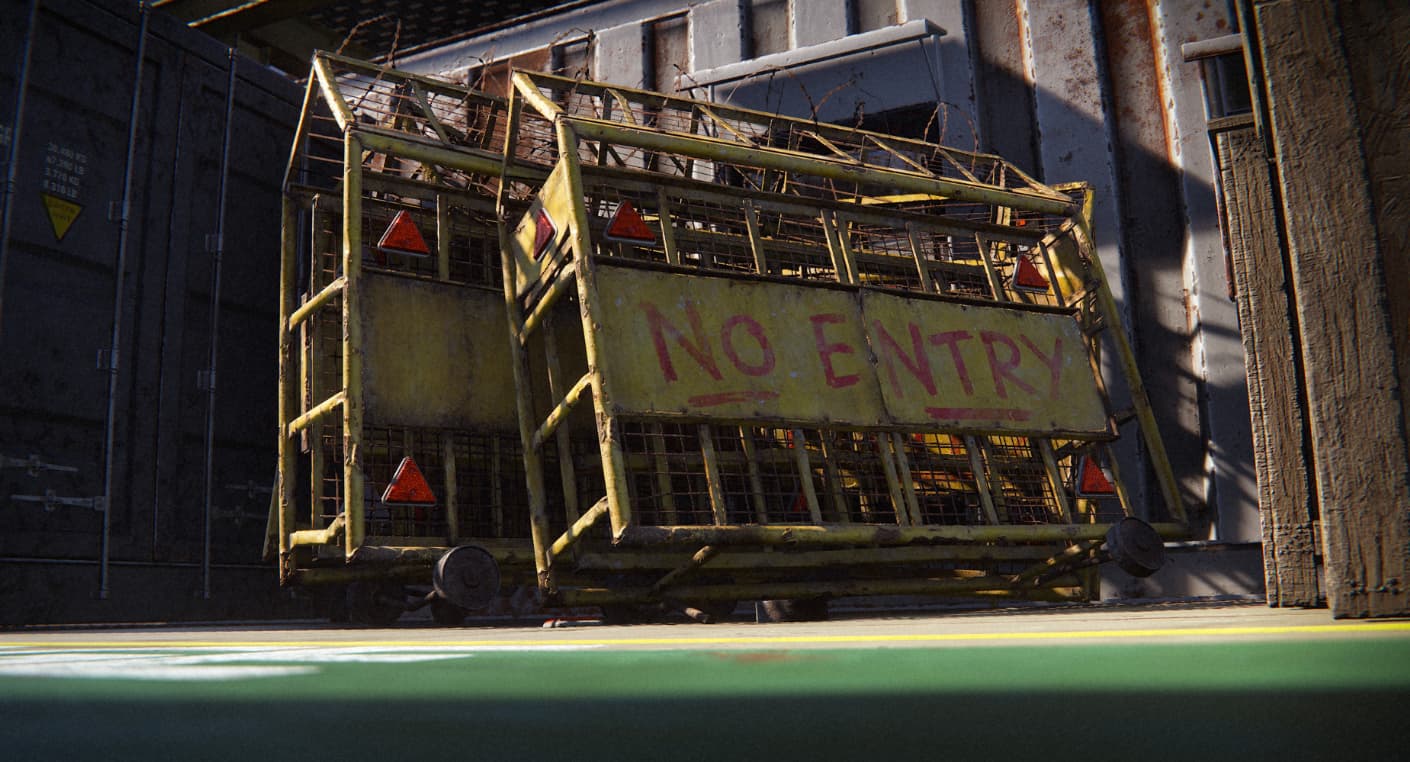
One of the most important additions in the breach and clear update is the new monument blocker system.
Destructible barriers now sit in front of red keycard puzzle rooms, creating an extra obstacle between newly spawned players and some of Rust's best early-wipe loot.
Five monuments are affected:
- Launch Site
- Military Tunnels
- Missile Silo
- Large Oil Rig
- Small Oil Rig
The idea is pretty simple: powerful groups can still rush high-tier monuments, but doing it immediately now costs resources, damage and time.
#How Much Damage Does a Monument Blocker Take?
The main blockers take roughly 1 Timed Explosive Charge or 5 Satchel Charges.
You can also chip away with melee weapons and other damage sources, assuming you have significantly more patience than explosives. There are weaker blockers scattered around too, and those are designed to come apart under melee alone.
Blockers have visible health bars, damage states and destruction effects, so you can at least see how much progress you're making before your satchels run out.
Once a blocker is destroyed, it stays destroyed. Nothing respawns.
And if nobody breaks it, it doesn't sit there forever. Facepunch has given the blockers a 24-hour grace period, after which they begin decaying on their own - testing suggested a full natural collapse somewhere around the 25-to-26 hour mark.
#Why Monument Blockers Matter
Anyone who has played a busy force wipe knows how quickly organised clans can snowball.
A coordinated group can rush monuments, secure high-tier loot and begin pulling away from the rest of the server surprisingly quickly. Monument blockers introduce another decision into that opening race.
Do you spend explosives clearing the route immediately? Do you find another way through? Or do you wait for somebody else to do the dirty work?
The blockers probably won't completely stop experienced clans from progressing quickly - Facepunch itself says that isn't the intention. But they should make the opening hours of a wipe less predictable.
Facepunch has also closed a related shortcut: you can no longer boost off a siege tower to skip the Launch Site red card puzzle, and the rocket factory ledge has been made taller to stop similar routes.
And in Rust, making the first day more chaotic is rarely a bad thing.
#Large Rust Groups Now Pay More Base Upkeep
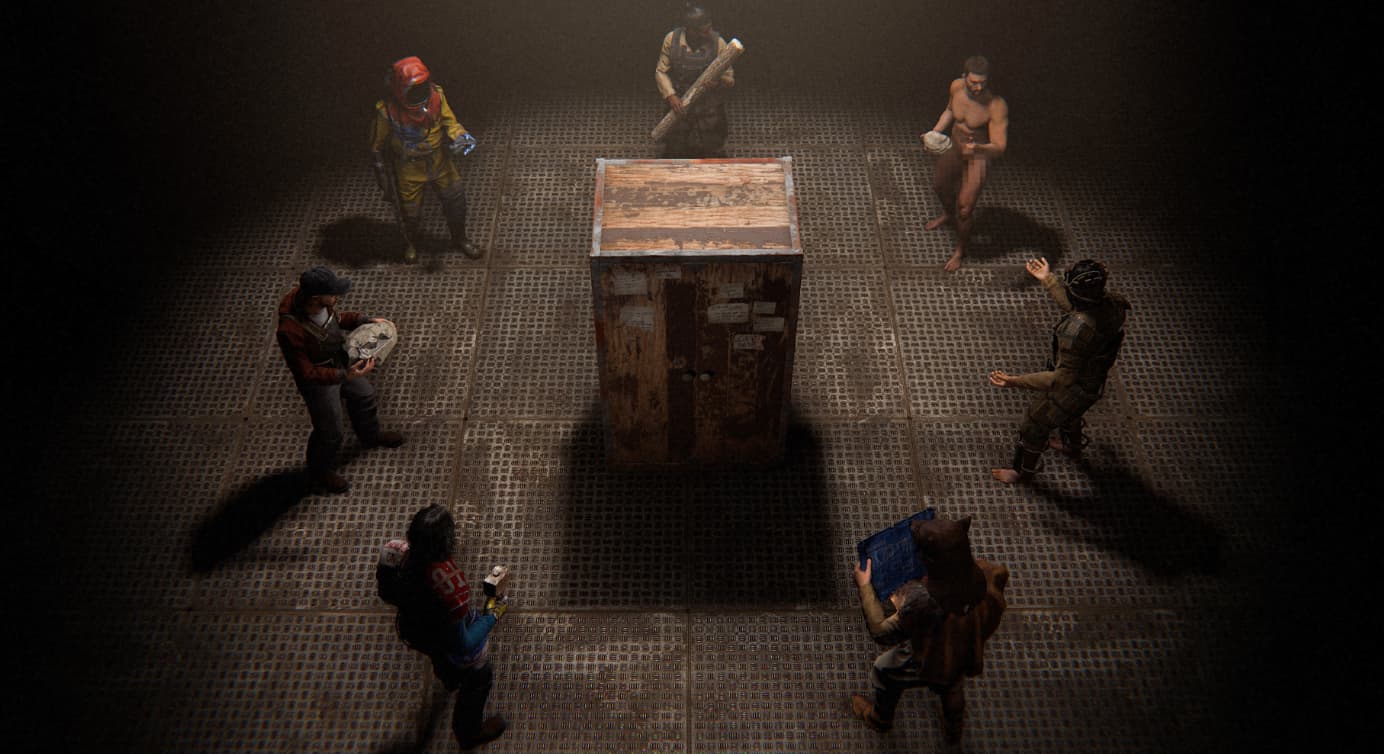
Life also gets slightly more expensive for giant clans.
Tool Cupboards can now apply an additional upkeep tax depending on how many players are associated with the base.
The scaling works like this:
- The first four players add no extra upkeep.
- The next six players each add 2% additional upkeep.
- Players beyond that each add another 4%.
- The maximum additional upkeep tax is 300%.
For example, a base associated with six players receives a 4% increase, while a 12-player base receives a 20% increase.
You can check exactly what you're paying by hovering over the upkeep cost while the Tool Cupboard is open, which saves a lot of guesswork on the first day of wipe.
And simply removing everyone from the Tool Cupboard before filling it won't work.
Rust considers several factors when calculating group size, including players who are:
- Authorised on the Tool Cupboard.
- Recently deauthorised from the Tool Cupboard.
- Authorised on code locks.
- Using guest access on code locks.
- Recently deauthorised from those code locks.
Recently removed players continue to count for 24 hours.
#Does This Hurt Small Groups?
Not really.
A four-player group pays no additional group-size tax, meaning solos, duos, trios and quads are effectively untouched by this particular mechanic.
The system is specifically aimed at introducing an extra logistical challenge for larger groups without directly buffing smaller teams. Facepunch has been fairly open about the reasoning: big groups bypass most of Rust's difficulty mechanics through sheer numbers, and the studio doesn't want to make that playstyle unviable - just give it a problem to solve.
Server owners aren't completely locked into Facepunch's settings either. ConVars in the Decay class can be used to adjust the group-upkeep behaviour or disable it entirely.
Large teams get one genuine win this month, too: authorising friends on turrets and other entities should no longer cause the enormous lag spikes that used to punish clans every time somebody new joined.
#Dedicated HQM Nodes Are Finally Here
High Quality Metal just became a little easier to hunt intentionally.
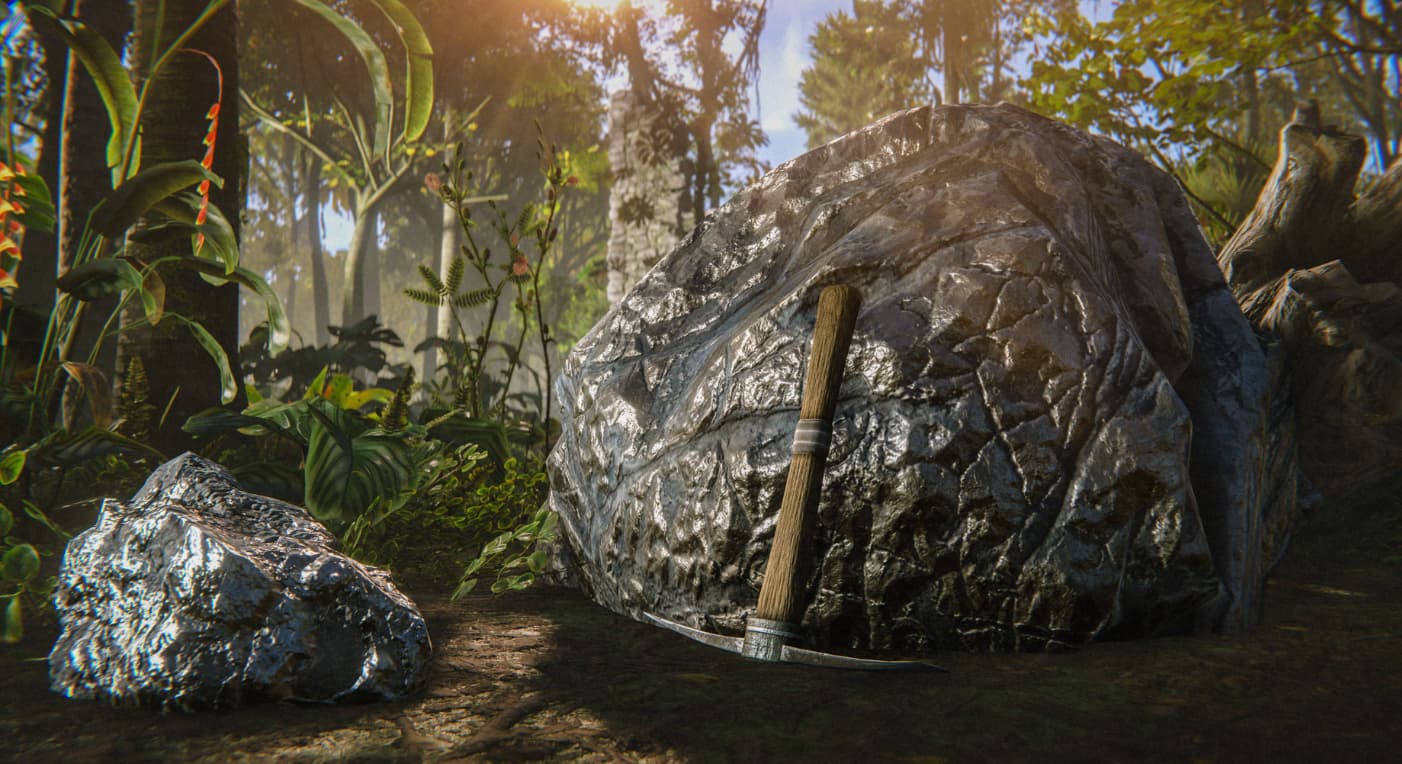
The Rust Breach and Clear update introduces both dedicated High Quality Metal ore nodes and smaller HQM collectables around procedural maps.
They're deliberately rare, so don't expect every mountainside to suddenly become an HQM vending machine.
Your best chance of finding them is in the Jungle biome, where Facepunch says HQM nodes are more common. They aren't strictly jungle-exclusive (testers turned up nodes in desert and temperate areas as well) but the collectables appear to be far more concentrated in the jungle.
Launch-period reporting lists the resource values as:
- HQM node: 20 High Quality Metal Ore, alongside roughly 400 Metal Ore.
- HQM collectable: 5 High Quality Metal Ore.
That gives players another reason to actively explore the Jungle rather than relying entirely on recycling components or gathering metal nodes for HQM.
It should also help offset at least some of that extra upkeep pressure facing bigger compounds.
Just remember: you're still in the Jungle. The free HQM may occasionally come with teeth.
#Attack Helicopters and Hot Air Balloons Have Breakable Armour
Flying around Rust with armour is still useful. It just isn't quite as permanent anymore.
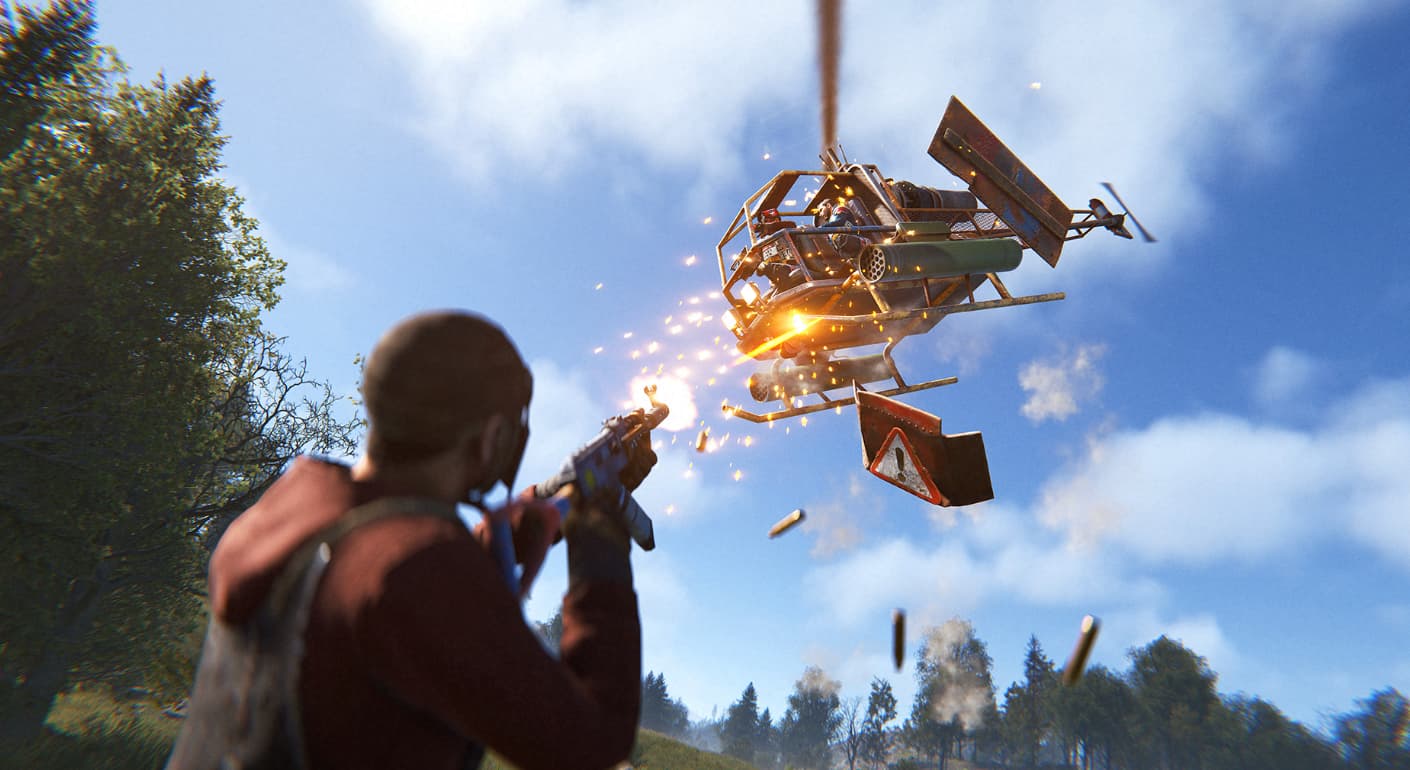
Vehicle armour can now physically break away as it takes damage, and the panels take their collision with them, opening real gaps rather than cosmetic scratches.
#Attack Helicopter Armour Changes
The Attack Helicopter's cockpit armour falls off panel by panel as the vehicle becomes damaged.
The armour stages are:
- Left panel: breaks at 680 HP / 80%.
- Right panel: breaks at 595 HP / 70%.
- Front panel: breaks at 510 HP / 60%.
Once those panels disappear, the pilot and gunner become increasingly exposed.
That means attacking an armoured helicopter is no longer just about dumping damage into a flying tank. Sustained fire can progressively create better opportunities to hit the people inside.
Facepunch has been direct about why: the community said the Attack Helicopter was too hard to counter, and this is the answer.
#Armoured Hot Air Balloon Changes
The armoured Hot Air Balloon works similarly, breaking apart chunk by chunk until only the frame is left.
Its protection now disappears in stages:
- Left panel: 2,250 HP / 90%.
- Right panel: 2,000 HP / 80%.
- Back panel: 1,750 HP / 70%.
- Front panel: 1,500 HP / 60%.
Equipping Hot Air Balloon armour has changed too. Instead of applying instantly, you now hold E for three seconds, complete with an effect - which should stop a few very expensive misclicks.
The result should make aerial combat more readable and give defenders a better feeling of actually wearing down heavily protected targets.
#Modular Cars Can Drift Now - Yes, Really
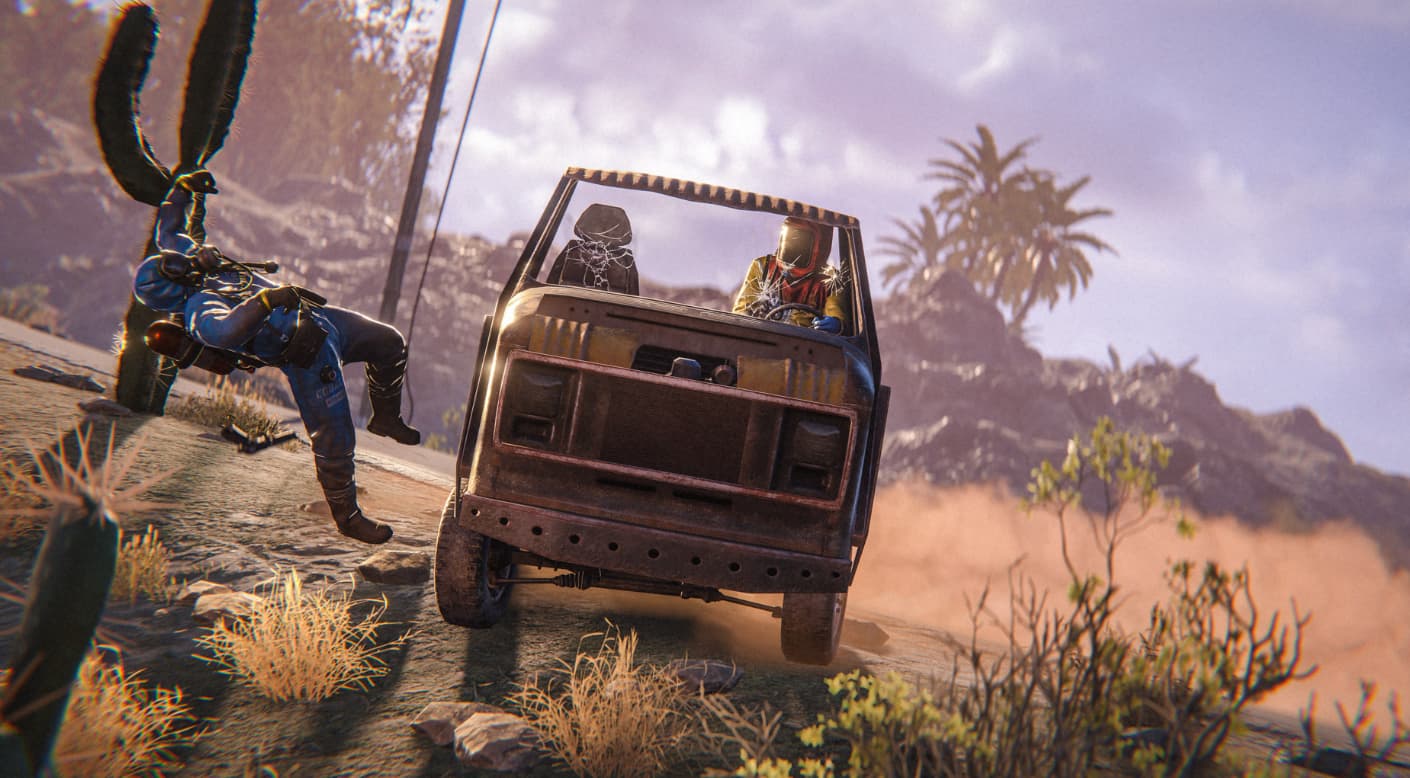
Rust's modular cars have received a broader handling overhaul covering steering, turning, suspension, grip and body roll.
They should feel more controllable in general, including for players dealing with higher latency, and there's been specific work done to reduce unexpected spinouts.
But let's be honest: everyone is going to care about one thing.
Rust has a handbrake now.
Holding CTRL while braking locks up the rear wheels, letting you kick the back end out for tighter turns, slides and proper drifts that can now be held at higher speeds.
That means you can now:
- Take sharper corners.
- Perform handbrake turns.
- Hold drifts through bends.
- Spin doughnuts for absolutely no tactical reason whatsoever.
Is it necessary for survival? Probably not.
Will somebody create an entire drift server around it? Almost certainly.
#The Medical Honey Bandage Gives Beekeeping Another Purpose
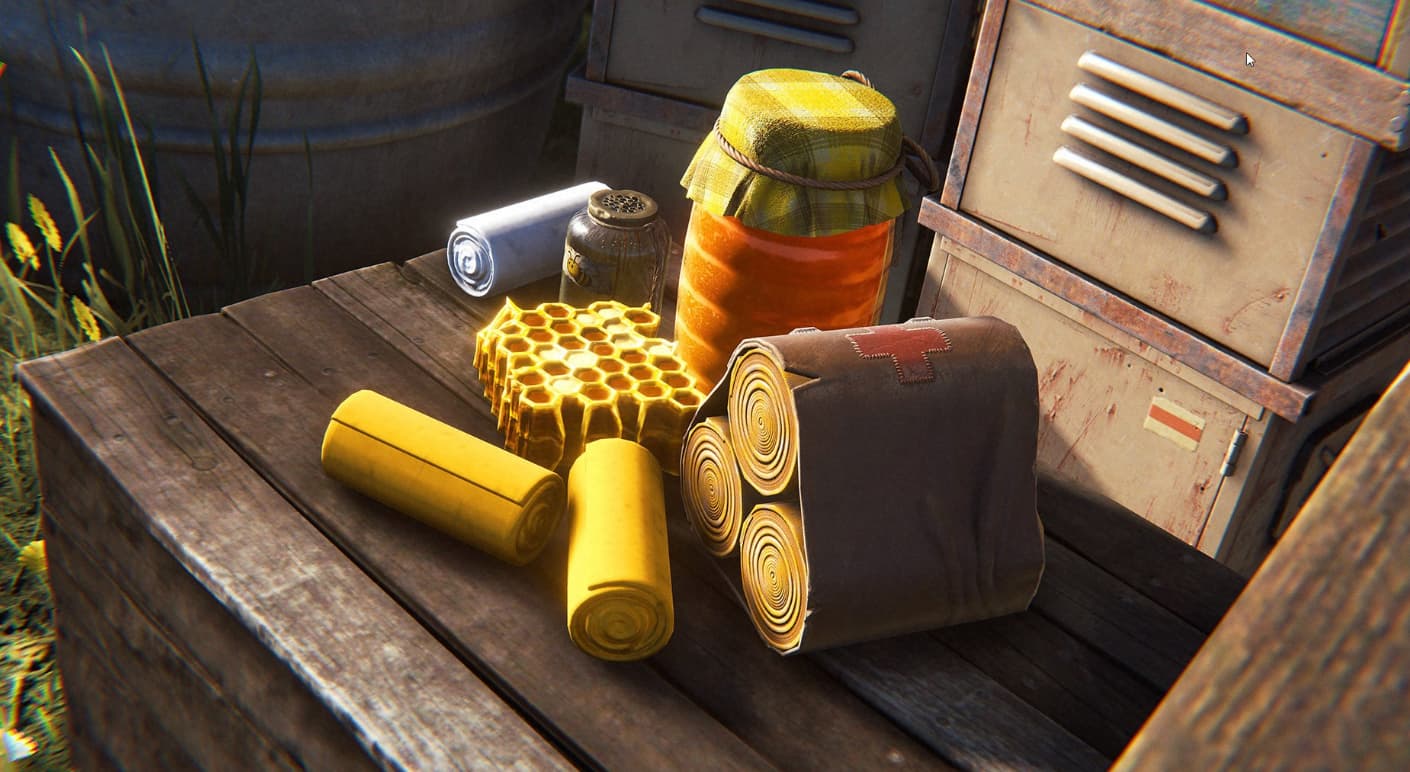
Honey has another practical use thanks to the new Medical Honey Bandage.
This Workbench Level 1 healing item is designed to sit between the basic Bandage and Medical Syringe, offering newer players another recovery option before they have consistent access to stronger medical supplies. In the tech tree it sits just beneath the Bee Grenade.
The Honey Bandage may be providing:
- 8 immediate health.
- 6 additional healing over time.
- 5 radiation removal.
- Meaningful bleed reduction on top of that.
- A crafting cost of 4 Cloth and 2 Honey.
You don't have to craft one, either. Honey Bandages can be found in medical crates and bought at the Water Well, which makes them a genuinely realistic option for a naked with 30 scrap and poor life choices.
Most importantly, it gives players running bee farms something else to do with surplus honey.
Between Honey Bandages and Bee Grenades, apparently the Rust meta now involves becoming increasingly threatening with beekeeping products.
#Combat and Item Balance Changes You Should Know About
The breach and clear Rust update also contains a sizeable collection of smaller balance adjustments.
#Nerfs and adjustments
- Semi-Automatic Pistols deal less damage at longer range and cost an extra 2 HQM to craft.
- Heavy Plate Helmets now muffle incoming game audio while worn, and the crafting cost has doubled to 2 Sheet Metal and 8 HQM.
- Heavy Plate Jackets and Pants produce movement sounds that nearby enemies can hear.
- Radwater sprinklers now seep through more armour types, making them far more dangerous against players in full kit. Hazmat Suits remain an effective counter.
- Grenade stacks have been cut. F1 Grenades, Bee Grenades, Molotovs and Flashbangs drop from 5 to 3, while Beancan Grenades sit at 4.
#Buffs worth noting
- Large Medkits now remove radiation, matching Medical Syringes.
- Homing Missile Launchers lock on roughly 30% faster.
- SAM Sites are considerably more effective against hostile drones, with faster missiles and a larger detonation area. They can also shoot explosives dropped by drones out of the air.
- The Longsword swings faster, more accurately, and with a larger attack radius.
- The HMLMG crafting cost drops from 60 HQM to 30 HQM.
- Hazmat Suits and Mortars are both cheaper to craft.
- The Boat Planner research cost falls from 120 scrap to 30.
- The Prisoner Hood is now a default blueprint rather than a tech tree unlock.
- Pies last longer across the board - Big Cat, Hunter's, Pork, Fish and Chicken durations have been extended, and Hunter's Pie bleed reduction rises from 75% to 90%.
- Swamp trees now yield around 1,000 wood instead of 300, bringing them in line with other trees.
- SMG bodies are slightly more common, while rifle bodies are slightly less common, nudging players toward mid-tier guns.
So if your normal roaming strategy involves carrying enough explosives to recreate a small artillery barrage, inventory management just became slightly more annoying.
#The Power Plant Now Controls Marketplace Drone Deliveries
August's Rust Power Trip update made the Power Plant much more important to the island's electrical infrastructure.
Breach and Clear takes that concept further.
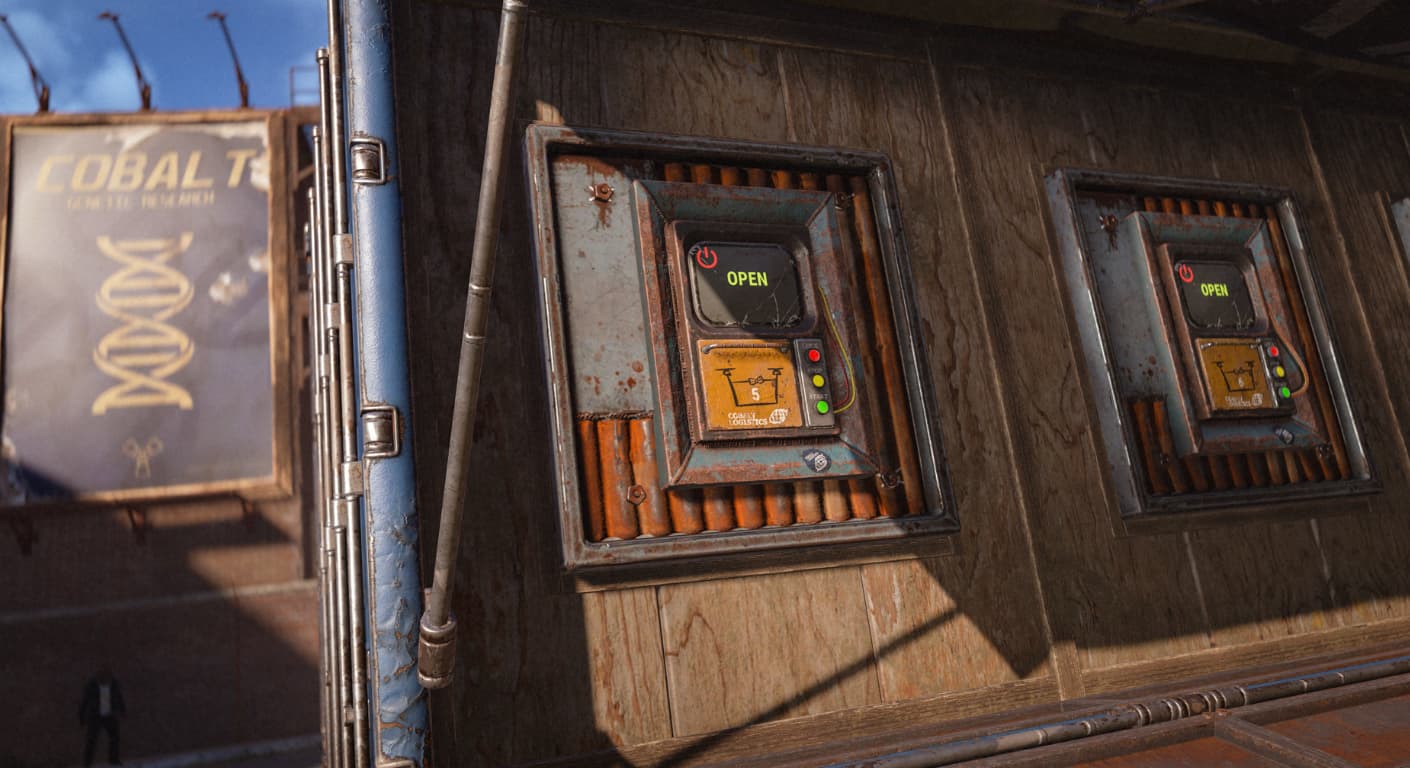
Marketplace drone deliveries at Outpost and Bandit Camp now depend on power generated through the Power Plant.
The marketplace has its own battery that charges when four or more fuses are active at the plant. Once the battery reaches 50%, drone purchases can begin.
After that:
- At least one active fuse prevents the marketplace battery from draining.
- If the charge falls below 50%, marketplace deliveries shut down again.
- Players can view the current charge level from the marketplace map interface.
There's a smaller knock-on effect too: rentable shop vending machines now refrigerate their food while the Power Plant is running.
It's another way Facepunch is turning monuments into systems that affect the wider server rather than isolated places you visit only for loot.
#The Water Treatment Plant Rework Is Easier to Read
Water Treatment Plant's maintainable systems have been simplified this month, which is good news for anyone who found last month's pressure mechanics slightly opaque.
The changes:
- Each gearbox turned fully now provides 3 hours of real-time water flow to the pipes.
- Turning both gearboxes fills the tank to maximum, worth 6 hours.
- Water output now scales linearly with tank pressure rather than dropping off unpredictably.
- You can check current pressure at the maintenance hut beside the ground-floor gearbox.
- When the tank empties, pipes around the map start losing water too.
IO output has also been increased to compensate, with one water pipe now roughly equivalent to two pumps and better push rates. There are more pipes on the map, and they're placed more consistently.
If you run a base built around water farming, this is probably the change that affects your day-to-day the most.
#Smaller Quality-of-Life Changes Worth Knowing About
Not every feature changes the meta, but several are immediately useful.
#Random Skin Crafting
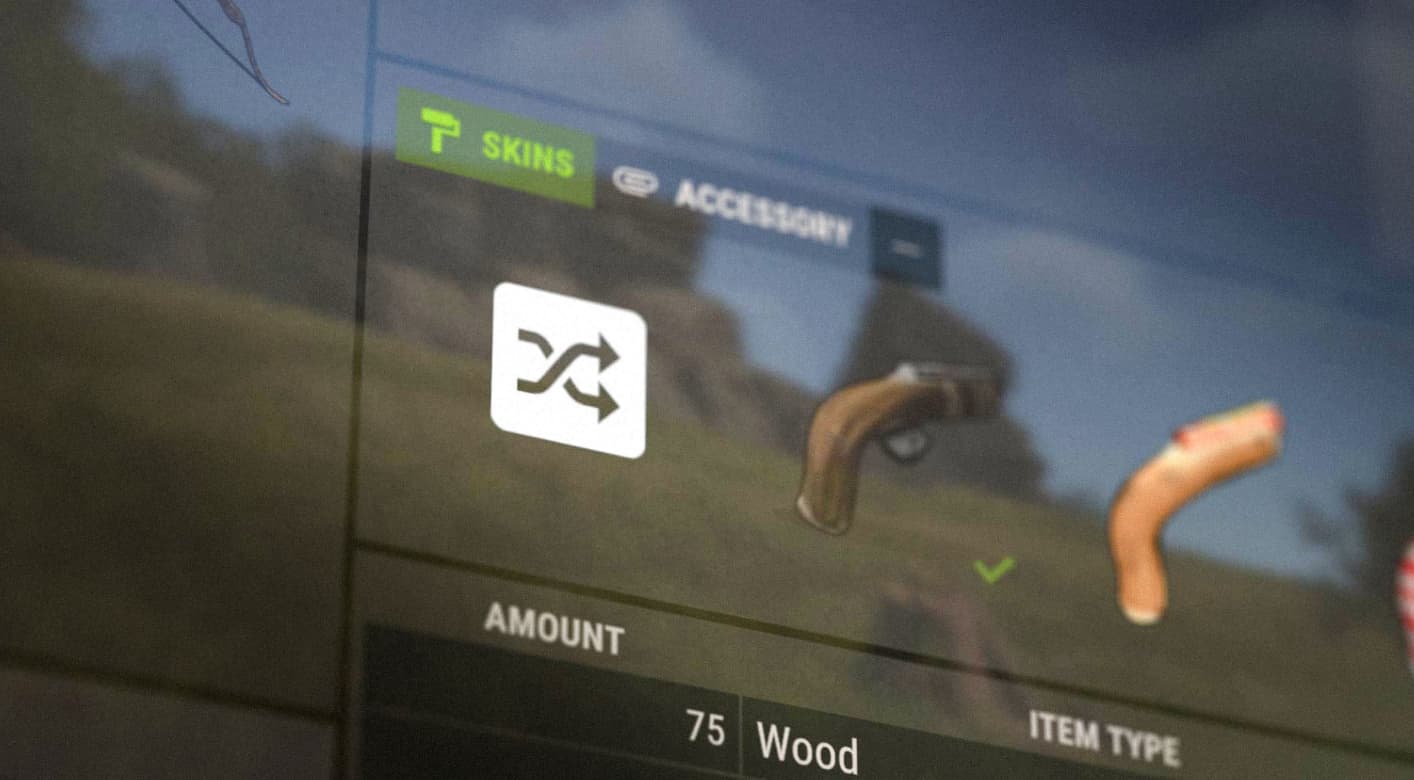
A new Random option appears at the beginning of the skin selector.
Enable it for an item and each craft will randomly choose from skins you already own. The setting is saved separately for each item, so you can randomise one weapon while keeping a specific favourite skin selected elsewhere.
#Flashlight Refresh
The Flashlight now has a new model, upgraded textures and refreshed animations.
Its controls have also been modernised: right-click toggles the flashlight on and off, similar to Rust's torches. You even get a different admire animation depending on whether it's switched on.
#Better Dropped Item Models
More than 70 new world models replace the generic burlap sack appearance previously used for many dropped items - electrical components, workbench upgrades, sleeping bags, landmines, keys, ladders, industrial parts and plenty more.
It's a small visual touch, but the ground around your base should now look much less placeholder-y.
#Painting Improvements
A Paint Brush Visualizer can display your active brush directly on the object you're decorating, making precise painting considerably easier.
Your masterpiece of a poorly drawn clan logo has never had better tooling.
#Everything else in the QoL pile
- The composter UI now works like a furnace, showing how long fertiliser will take.
- Rust+ finally supports leaving your team and kicking members.
- Jukeboxes have deployment snapping.
- Unlocked garage doors can be picked up without building privilege, matching other doors.
- Chinese lanterns can be picked up with fuel still inside.
- Dome fuel pumps now cap crude storage at 1,000 instead of 10,000.
- New clan achievements have been added.
#New Skins, Models and DLC
Cosmetically, September is busier than usual.
The Salvaged Hammer has had a full art refresh with a new high-quality model, textures, animations and sounds. Wooden arrows have been revamped with new fletching and a more "Rust" look. The most commonly looted crates (basic, military and elite) have all had a visual overhaul, along with updated destruction gibs, though their loot tables are unchanged.
This month's Workshop skinnable is the full Wood Armor set: chestplate, pants, helmet and gloves. If you've been waiting for a reason to get into skin creation, four items at once is a decent opening.
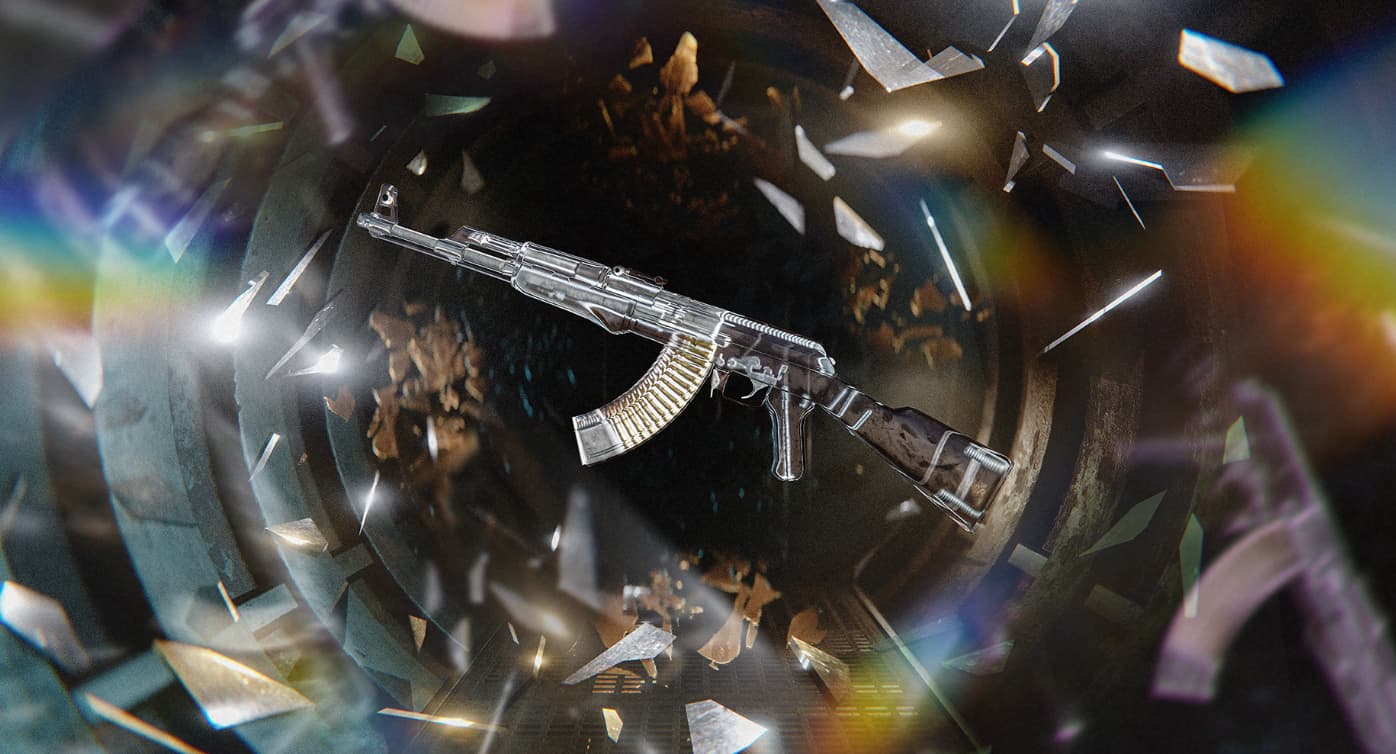
There's also a new DLC skin, the Crystal Assault Rifle, available in five colour variations. It displays the ammunition in the magazine and the internal workings as you fire, which is a first for an AK skin.
Owners of the Large Fireworks Pack also get a new White Boomer firework, plus updated icons across the whole firework range.
#Server Performance Gets Some Serious Attention
Some of the best parts of the Rust Breach and Clear update aren't flashy enough to appear in a trailer.
Facepunch has made substantial changes to networking, physics, memory use and entity handling.
Around 300 world objects now use shorter network ranges where appropriate (signs, mushrooms, driftwood and similar clutter) reducing unnecessary data being sent to clients for objects players couldn't realistically see anyway. Nothing visible at long distance has been affected.
Physics processing has also been reworked with a new broadphase mode built on a BVH structure. In simple terms, the old system scaled with the total number of colliders in the world, which only grows as a wipe goes on. The new one scales with the number of changes being made, which tracks much more closely with active player count. Facepunch reported one internal server test where physics performance roughly doubled.
Memory optimisation includes:
- Reduced memory usage across roughly 15,000 world objects, worth about 10MB.
- Smaller ambient-occlusion textures, saving around 630MB of VRAM with almost no visual difference.
- Reduced texture sizes for distant objects.
- More than 0.5GB of memory savings in early testing, depending on the system.
Vehicle pooling should also reduce some of the stutters that occurred when vehicles disappeared from and re-entered network range. Previously, vehicles were destroyed and rebuilt entirely, causing hitches of 20-30ms - long enough to feel.
There's some deeper engine work in here too. Facepunch found a way to safely parallelise Unity scripting calls that previously had to run on the main thread, and used it to cut server occlusion generation for a 4,500-size world from 37 seconds to 22.
#What Server Owners Need to Know
If you run your own server, Breach and Clear has a few changes worth planning for.
-
Group upkeep is configurable. The new ConVars live in the Decay class, so you can soften the scaling, change the tiers, or switch the whole system off if it doesn't suit your community.
-
The new navmesh is being tested on live. Facepunch introduced a rebuilt navmesh a few patches back, disabled by default behind the
-useNewNavmeshlaunch parameter. This month it's enabled on some official servers, with the goal of making it default in a hotfix or the October patch. Navmesh is saved to disk and reloaded on restart, which can mean faster boots, and NPC navigation costs less on the main thread while using more background threads. The trade-off, in Facepunch's own words, is that animals may occasionally wander into bases or monuments. -
Restarts should hurt less. Several major server events now preserve their state through restarts:
- Oil Rigs, including hackable crate progress.
- Cargo Ship, including completed loot rounds and remaining crate spawns.
- Patrol Helicopter.
- Bradley APC.
- Satellite crash sites.
Event crate despawn timers have also been standardised to 30 minutes across the board.
That's especially useful if your Oil Rig run happens to line up perfectly with a scheduled restart and you'd rather not watch your hackable crate disappear into the void.
There's also a new deepsea.terrain_everywhere ConVar for enabling deep sea terrain on the mainland, if you fancy building something strange.
Facepunch is consolidating its own servers too, retiring EU Primitive 2, CAN Primitive 1 and US West Primitive 1, and shrinking EU Hardcore 1 and US East Hardcore 1 from 4,250 to 3,750 map size.
Server owners looking to build a fresh community around these changes can also use affordable Rust server hosting (with Shockbyte of course) to customise their map, rules and player experience while taking advantage of the latest server-side improvements.
#What Does Breach and Clear Mean for Your Next Rust Wipe?
For most players, Breach and Clear won't completely reinvent Rust.
Instead, it changes a bunch of familiar routines.
Large clans have to think slightly harder about upkeep. Early monument rushing comes with additional obstacles. HQM hunters have a new reason to visit the Jungle. Armoured aircraft become more vulnerable as fights continue. Cars are easier (and considerably more entertaining) to drive.
If you're jumping into a fresh wipe, there are a few things worth remembering:
- Budget explosives for monument routes. One C4 or five satchels per blocker, at Launch Site, Military Tunnels, Missile Silo and both Oil Rigs.
- Large groups should check their Tool Cupboard tax. Hover over the upkeep cost to see it. Code-lock access counts too.
- Search the Jungle if you're actively hunting HQM.
- Keep firing at armoured aircraft. Their protection becomes weaker as panels break away.
- Don't ignore Power Plant activity. It can now affect marketplace drone availability across the map.
- Try the new handbrake immediately. Tactical value optional.
#Rust Breach and Clear Update FAQ
#When did the Breach and Clear update release?
Thursday 3 September 2026, at 19:00 BST / 14:00 EST, alongside the monthly force wipe.
#When is the next Rust force wipe?
Force wipes land on the first Thursday of each month, so the next one is due Thursday 1 October 2026.
#How much C4 do you need for a monument blocker?
Roughly one Timed Explosive Charge, or five Satchel Charges. Melee and other damage types work, they just take a while.
#Which monuments have blockers?
Launch Site, Military Tunnels, Missile Silo, Large Oil Rig and Small Oil Rig.
#Do monument blockers respawn?
No. Once destroyed they're gone for the wipe. If nobody breaks one within 24 hours, it starts decaying on its own.
#How do you drift in Rust?
Hold CTRL while braking in a modular car to lock the rear wheels.
#Does the upkeep tax affect solo players?
No. The first four players authorised on a base add no extra upkeep at all.
#Where do HQM nodes spawn?
Anywhere on the island, but they're most common in the Jungle biome. Nodes give 20 HQM Ore, collectables give 5.
#Is the Rust Breach and Clear Update a Big Deal?
Breach and Clear is less of a massive expansion and more of a wide-reaching rebalance, but that's exactly what makes it interesting.
The monument and group-upkeep changes directly target early-wipe snowballing without simply punishing solo players. Vehicle armour becomes more interactive. New HQM resources and healing options add reasons to use existing systems. Meanwhile, a huge amount of work behind the scenes should make busy servers run more efficiently.
Put together, the breach and clear update makes Rust's September wipe slightly harder to optimise - and potentially much more chaotic.
Which, for Rust, feels pretty appropriate.
We think you will also enjoy the following blogs:

Table Of Contents
What Is the Rust Breach and Clear Update?Monument Blockers Make Early-Wipe Loot More ContestedLarge Rust Groups Now Pay More Base UpkeepDedicated HQM Nodes Are Finally HereAttack Helicopters and Hot Air Balloons Have Breakable ArmourModular Cars Can Drift Now - Yes, ReallyThe Medical Honey Bandage Gives Beekeeping Another PurposeCombat and Item Balance Changes You Should Know AboutThe Power Plant Now Controls Marketplace Drone DeliveriesThe Water Treatment Plant Rework Is Easier to ReadSmaller Quality-of-Life Changes Worth Knowing AboutNew Skins, Models and DLCServer Performance Gets Some Serious AttentionWhat Server Owners Need to KnowWhat Does Breach and Clear Mean for Your Next Rust Wipe?Rust Breach and Clear Update FAQJoin Our Newsletter
Get updated on the latest news!
Join Our Discord
Be part of our community!